
Opportunity zone developments address housing need, bring investor benefits

Call it a classic win-win.

An underdeveloped or underutilized area matures into new or improved housing. At the same time, the investors who help make it possible benefit. That’s the outcome offered by qualified opportunity zones — designated areas created through the 2017 federal Tax Cuts and Jobs Act to encourage long-term investment in economically distressed census tracts. The program recently was made permanent under federal legislation, allowing for ongoing use as a development tool.

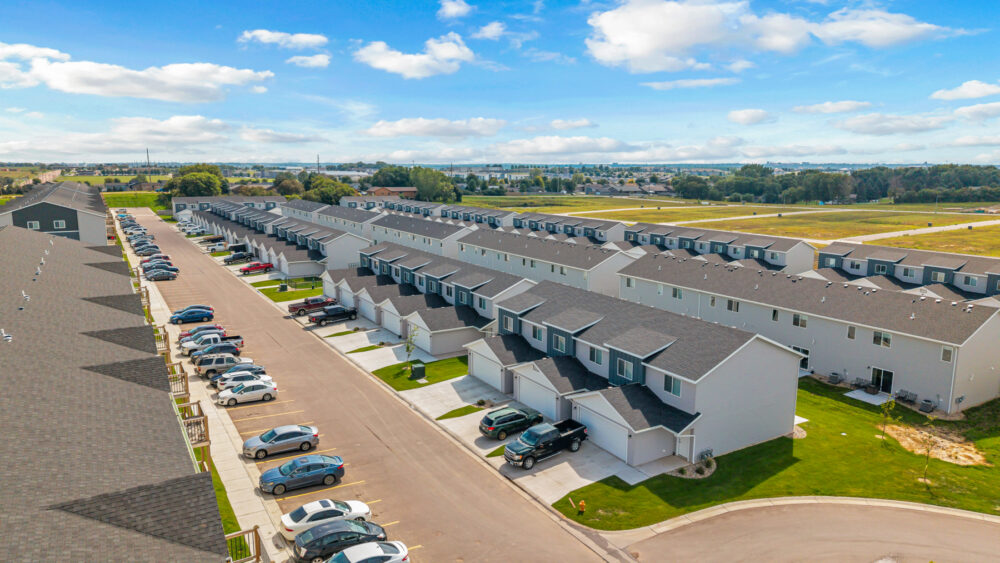
“We’ve approached opportunity zone investing by first making sure what we pursue would be a successful project on its own,” said Chris Daugaard, a partner in Ernst Capital Group. “Tax policy can change outside of our control, but if we can have a successful project and have it be located in an opportunity zone, that’s definitely the right combination.” That’s what came to fruition with the Yukon at Benson, a 241-unit apartment and townhome complex in northwest Sioux Falls developed by Signature Cos. with funding from Ernst Capital investors.

“This is an area that’s on the future edge of Sioux Falls development in an area where there’s potential for economic growth, which is where we like to locate many of our investments,” Daugaard said. “The Yukon has performed really well. Construction came in below budget with our entire contingency left over, lease-up continues to be very strong, and we expect to stabilize occupancy in the next month.”

Ernst Capital financed its first opportunity zone project in Sioux Falls at Aspen Commons, a multifamily development near Jefferson High School. “We didn’t have investor capital in it because this was a new concept and we wanted to figure it out using our dollars and not investors’ funds,” Daugaard said. “We learned more about the program, got more tax guidance and were glad we did a dry run without any investor dollars at risk.”

In a qualified opportunity zone, tax benefits are twofold. Investors can defer capital gains taxes by reinvesting in qualified projects located in these zones, and if the investment is held for at least 10 years, any additional gains on that investment can be tax-free. “Our investments are generally long-term, so it’s a good fit,” Daugaard said. “That said, the benefits are unique on an individual basis depending on your tax situation. So you’ll want to talk to your tax professional to determine if it’s a good fit for you. Because this is a decade-old program, most tax professionals have had experience with it.”

Ernst Capital also invested in an opportunity zone project in Box Elder, where Lloyd Cos. developed The Union multifamily complex, primarily for those serving at nearby Ellsworth Air Force Base. “That development also has done well,” Daugaard said. “It’s up and stabilized with 97 percent occupancy and well within budget for construction.” South Dakota currently has 25 designated qualified opportunity zones in 17 counties. Now that the program is permanent, South Dakota will be able to reevaluate which areas will be designated as federal criteria evolves. “There are maps showing potential opportunity zones, and they will be redone every 10 years going forward to reflect changing demographics and market conditions,” Daugaard said. “From there, South Dakota will be able to decide where specifically the state believes new development or redevelopment would have potential or bring the largest benefit.”

Going forward, Ernst Capital sees continued prospects for future projects. “We think the Yukon at Benson in particular is a strong example for a model that can work in other parts of Sioux Falls and other communities,” Daugaard said. “We’ll have opportunities to bring on additional investors interested in projects like these.”

Read More

Build-to-rent housing finds early market in Sioux Falls

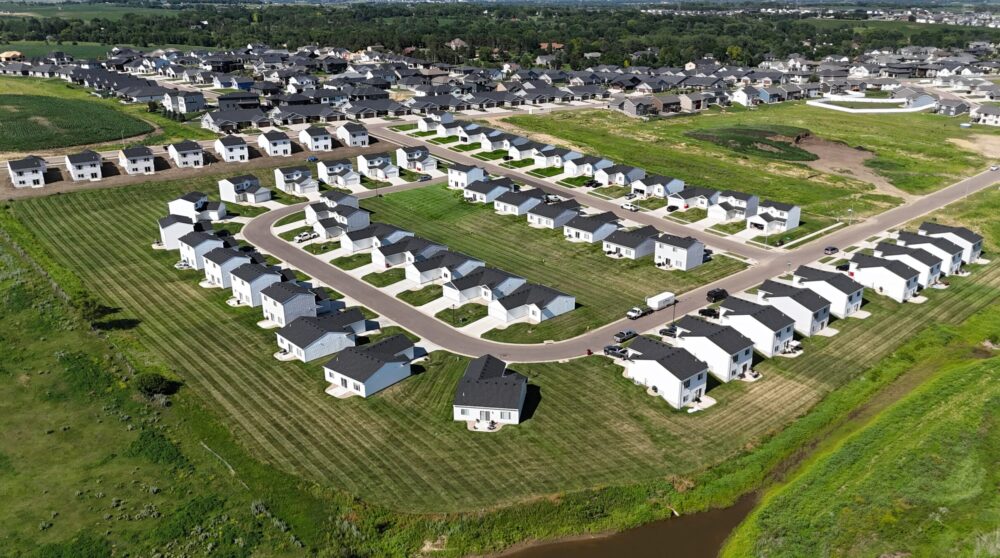
Take the best elements of owner-occupied housing, blend them with the perks of renting, and the result explains a fast-growing housing approach finding early success in Sioux Falls. Build-to-rent housing involves developing professionally managed neighborhoods that mimic the look and feel of owner-occupied housing while being designed for tenants. “It’s really built like a single-family development, but the full plan and intent from the start is an entire rental community,” said Chris Daugaard, a partner in Ernst Capital Group. “It’s really filling a pretty unique niche in the housing market right now.”

Ernst Capital Group provided capital for the first full build-to-rent neighborhood in Sioux Falls: Willowbrook Village from developer Signature Cos., which opened in 2024 at 6544 E. Pine Grove Place, northeast of Veterans and Arrowhead parkways. The 57 detached two- and three-bedroom homes are 100 percent leased. “These are brand-new units with an attached two-stall garage and small yard. They have privacy, but they also have next-door neighbors, and they enjoy lawn care, trash service and snow removal included in their rent,” Daugaard said. “There’s definitely a sense of community that’s been formed here.” Not only that, but also the units rent for nearly $1,000 less per month than a mortgage with insurance and property taxes on a comparable single-family home, he said.

“We essentially build the whole neighborhood at once, and the land is sold in one parcel, so it’s bought wholesale instead of retail,” he explained, “and they can be financed more affordably at scale, so the cost drivers are cheaper.” Many current Willowbrook renters are retirees, “and they want the easy living with no maintenance,” he added. “Someone else takes care of the details, and they get a nice rental home that’s cheaper than buying one. It’s still early at Willowbrook, but we anticipate turnover of tenants will be significantly below other multifamily properties.”

Ernst Capital is waiting to invest in additional build-to-rent communities until there is greater clarity around federal policy related to the housing category, he said. “There are efforts by the federal government to limit large institutions buying up existing homes and competing with homebuyers, but since this is a very different concept from that, we’re hopeful the value of building brand-new neighborhoods like these is taken into account,” Daugaard said. “The conversation at the federal level doesn’t affect existing properties.” “We’re creating new housing supply in a way that’s very popular with renters. We’re able to build with scale and achieve pricing that’s incredibly positive for residents and a solid value for investors.” In anticipation of being able to move forward with additional projects, Ernst Capital is actively considering opportunities in Sioux Falls and other markets it views as a good fit, he said. “We have one site that’s ready to go,” Daugaard said. “There’s definitely potential in other markets where we do business. People are surprised when they hear the numbers because it really brings value to a renter you can’t get anywhere else.”

Read More

Privacy Settings
We use cookies to enhance your experience while using our website. If you are using our Services via a browser you can restrict, block or remove cookies through your web browser settings. We also use content and scripts from third parties that may use tracking technologies. You can selectively provide your consent below to allow such third party embeds. For complete information about the cookies we use, data we collect and how we process them, please check our Privacy Policy
Youtube
Consent to display content from - Youtube
Vimeo
Consent to display content from - Vimeo
Google Maps
Consent to display content from - Google